What Is a Lab-Grown Diamond? A Complete Buying Guide
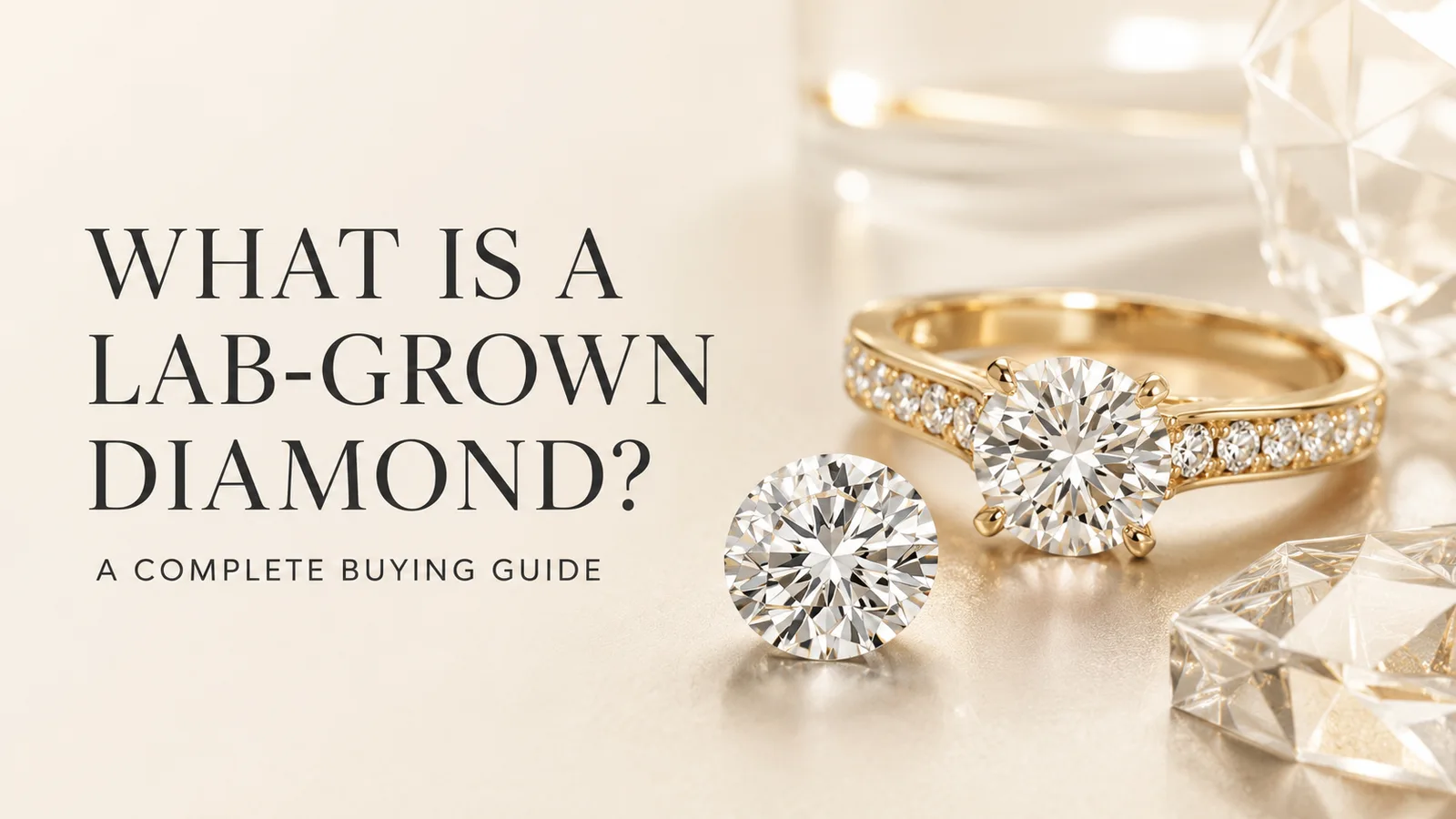
Diamond jewellery is no longer reserved only for weddings and special occasions. Today, people choose diamond jewellery for everyday wear, engagements, anniversaries, gifting, and even as a personal reward.
As jewellery preferences continue to evolve, lab-grown diamonds have become a popular choice among modern buyers. However, many customers still have questions:
What is a lab-grown diamond? Is it a real diamond? How is it made? How is it different from a natural diamond?
Let us answer these questions in simple terms.
What Is a Lab-Grown Diamond?
A lab-grown diamond is a diamond created in a controlled laboratory environment using advanced technology.
It has essentially the same chemical composition, crystal structure, and physical properties as a natural diamond. Both are primarily made of carbon and can display exceptional brilliance, hardness, and sparkle.
The main difference is their origin:
A natural diamond forms deep within the Earth over a very long period.
A lab-grown diamond is created in a laboratory using advanced technology.
It is generally not possible to distinguish a lab-grown diamond from a natural diamond simply by looking at it. Specialised testing equipment and a grading report are required to accurately identify its origin.
Are Lab-Grown Diamonds Real Diamonds?
Yes, lab-grown diamonds are real diamonds.
They are not glass, American diamonds, or cubic zirconia. Diamond simulants may look similar to diamonds, but their chemical and physical properties are different.
Lab-grown diamonds offer many of the same important characteristics associated with natural diamonds:
Beautiful sparkle and brilliance
A strong crystal structure
Exceptional hardness
Grading based on Cut, Colour, Clarity, and Carat
Durability suitable for long-term jewellery use
Always check the diamond’s grading or certification report before making a purchase.
How Are Lab-Grown Diamonds Made?
Lab-grown diamonds are primarily created using two methods: CVD and HPHT.
1. CVD Method
CVD stands for Chemical Vapour Deposition.
During this process, a diamond seed is placed inside a specially designed chamber. Carbon-containing gases and controlled temperatures allow layers of carbon to gradually form on the seed, eventually creating a diamond crystal.
The CVD method can produce high-quality diamonds suitable for fine jewellery.
2. HPHT Method
HPHT stands for High Pressure High Temperature.
This method recreates the intense heat and pressure conditions found deep within the Earth. Under these controlled conditions, carbon develops around a diamond seed and forms a diamond crystal.
Both CVD and HPHT are recognised diamond-growing methods. The quality of a diamond depends not only on the production method but also on its Cut, Colour, Clarity, and Carat.
Lab-Grown Diamonds vs Natural Diamonds
Feature | Lab-Grown Diamond | Natural Diamond |
|---|---|---|
Origin | Created in a laboratory | Formed naturally within the Earth |
Primary Composition | Carbon | Carbon |
Appearance | Brilliant sparkle and shine | Natural brilliance and sparkle |
Quality Assessment | Cut, Colour, Clarity, and Carat | Cut, Colour, Clarity, and Carat |
Price | Generally more accessible | Generally more expensive |
Availability | Greater flexibility in size and design | Availability depends on rarity |
Identification | Requires specialised testing | Origin can be confirmed through specialised testing |
The right choice depends on your budget, preferences, occasion, and personal values.
Benefits of Choosing Lab-Grown Diamonds
Greater Budget Flexibility
Lab-grown diamonds are generally available at more accessible prices than comparable natural diamonds. This may allow customers to choose a larger diamond or a more detailed jewellery design within their budget.
Beautiful Brilliance
A well-cut lab-grown diamond can offer impressive brilliance and sparkle. The quality of the cut plays an important role in how effectively a diamond reflects light.
A Wide Range of Designs
Lab-grown diamonds can be used in various jewellery designs, including:
Diamond rings
Pendant necklaces
Earrings
Nose pins
Mangalsutras
Bracelets
Engagement rings
Everyday-wear jewellery
Suitable for Modern Jewellery
From minimal pendants to statement engagement rings, lab-grown diamonds can complement both modern and traditional jewellery designs.
Transparent Origin
Many modern customers want to understand where their diamonds come from and how they are produced. When purchasing a lab-grown diamond, ask for clear information about its origin, treatments, and grading report.
Understanding the 4Cs of a Diamond
When selecting a lab-grown diamond, do not consider only its carat weight. Understanding all four quality factors is essential.
Cut
The cut affects a diamond’s brilliance and sparkle. A well-cut diamond reflects light beautifully and can appear more attractive.
Colour
The colour grade indicates how colourless a diamond appears. The colour of the jewellery’s gold and its overall design should also be considered when choosing a diamond.
Clarity
Clarity describes the internal inclusions and external characteristics of a diamond. Many inclusions are too small to be seen with the naked eye.
Carat
Carat measures the weight of a diamond. A higher carat weight does not automatically make a diamond more beautiful. Cut and overall quality are equally important.
What Should You Check Before Buying a Lab-Grown Diamond?
Before purchasing lab-grown diamond jewellery, check the following:
Read the diamond’s complete description.
Ask for its grading or certification report.
Review its Cut, Colour, Clarity, and Carat.
Check the purity of the gold used in the jewellery.
Verify the applicable BIS Hallmark and HUID details.
Understand the exact product measurements.
Read the return, exchange, and warranty policies.
Purchase only from a trusted jeweller.
Keep the invoice and certification documents safely.
Follow the recommended jewellery-care instructions.
9K, 14K, 18K, or 22K Gold: Which One Should You Choose?
Your choice of gold purity should depend on the design, durability, appearance, intended use, and budget.
9K Gold: An accessible and durable option for everyday jewellery
14K Gold: Offers a practical balance between durability and gold content
18K Gold: Provides a richer gold appearance and is popular for premium jewellery
22K Gold: Contains a higher proportion of gold, but its suitability for diamond settings depends on the design
Do not consider purity alone. The strength of the setting and how frequently you plan to wear the jewellery are also important.
How to Care for Lab-Grown Diamond Jewellery
Follow these tips to maintain the sparkle of your diamond jewellery:
Wear jewellery after applying perfume, lotion, and makeup.
Keep it away from harsh chemicals.
Store each piece separately in a soft pouch or jewellery box.
Use lukewarm water, mild soap, and a soft brush for gentle cleaning.
Dry it with a soft, lint-free cloth.
Arrange a professional inspection if you notice a loose setting or damage.
Who Should Choose Lab-Grown Diamond Jewellery?
Lab-grown diamond jewellery can be a suitable choice for customers who:
Want more diamond options within their budget
Prefer modern and elegant jewellery
Are searching for everyday-wear diamond pieces
Need a meaningful engagement or anniversary gift
Prioritise certified diamonds and BIS-hallmarked gold
Want to create a customised jewellery design
Why Choose Ellips Diamond Jewellers?
At Ellips Diamond Jewellers, we value quality craftsmanship, elegant designs, and individual customer preferences.
Our jewellery collection includes:
Certified Lab-Grown Diamonds
Options in 9K, 14K, 18K, and 22K BIS-Hallmarked Gold
Yellow Gold, Rose Gold, and White Gold options
Rings, Pendants, Earrings, Nose Pins, Mangalsutras, and Bracelets
Customisation options
Jewellery for everyday wear and special occasions
Frequently Asked Questions
Do lab-grown diamonds look like natural diamonds?
Yes. A high-quality lab-grown diamond can display brilliance and sparkle comparable to a natural diamond. Specialised equipment and a grading report are required to accurately determine its origin.
Can lab-grown diamond jewellery be worn every day?
Yes. Lab-grown diamond jewellery can be suitable for everyday wear when it has a secure setting and is properly maintained.
Is a lab-grown diamond the same as cubic zirconia?
No. Cubic zirconia is a diamond simulant. A lab-grown diamond has a carbon crystal structure and is a real diamond produced in a laboratory.
Which is better: CVD or HPHT?
Both are recognised production methods. Instead of selecting a diamond based only on its growing method, consider its overall quality, 4Cs, and grading report.
Does lab-grown diamond jewellery have a BIS Hallmark?
A BIS Hallmark confirms the purity of the gold used in the jewellery. It does not certify the diamond. Gold hallmarking and diamond grading are two separate forms of verification.
Is buying a lab-grown diamond a good choice?
A lab-grown diamond can be a suitable choice if you want beautiful diamond jewellery, modern designs, and greater budget flexibility. Your final decision should depend on your preferences, budget, and reason for purchasing.
Discover Your Perfect Diamond Jewellery
Explore the elegant Lab-Grown Diamond Jewellery Collection from Ellips Diamond Jewellers.
Choose your preferred design, gold purity, and gold colour, or contact us to create a customised piece of jewellery.
Certified Lab-Grown Diamonds • BIS-Hallmarked Gold • Customisation Available
Contact: support.ellips@gmail.com
Ellips Diamond Jewellers