Diamond 4Cs Explained: Cut, Colour, Clarity and Carat
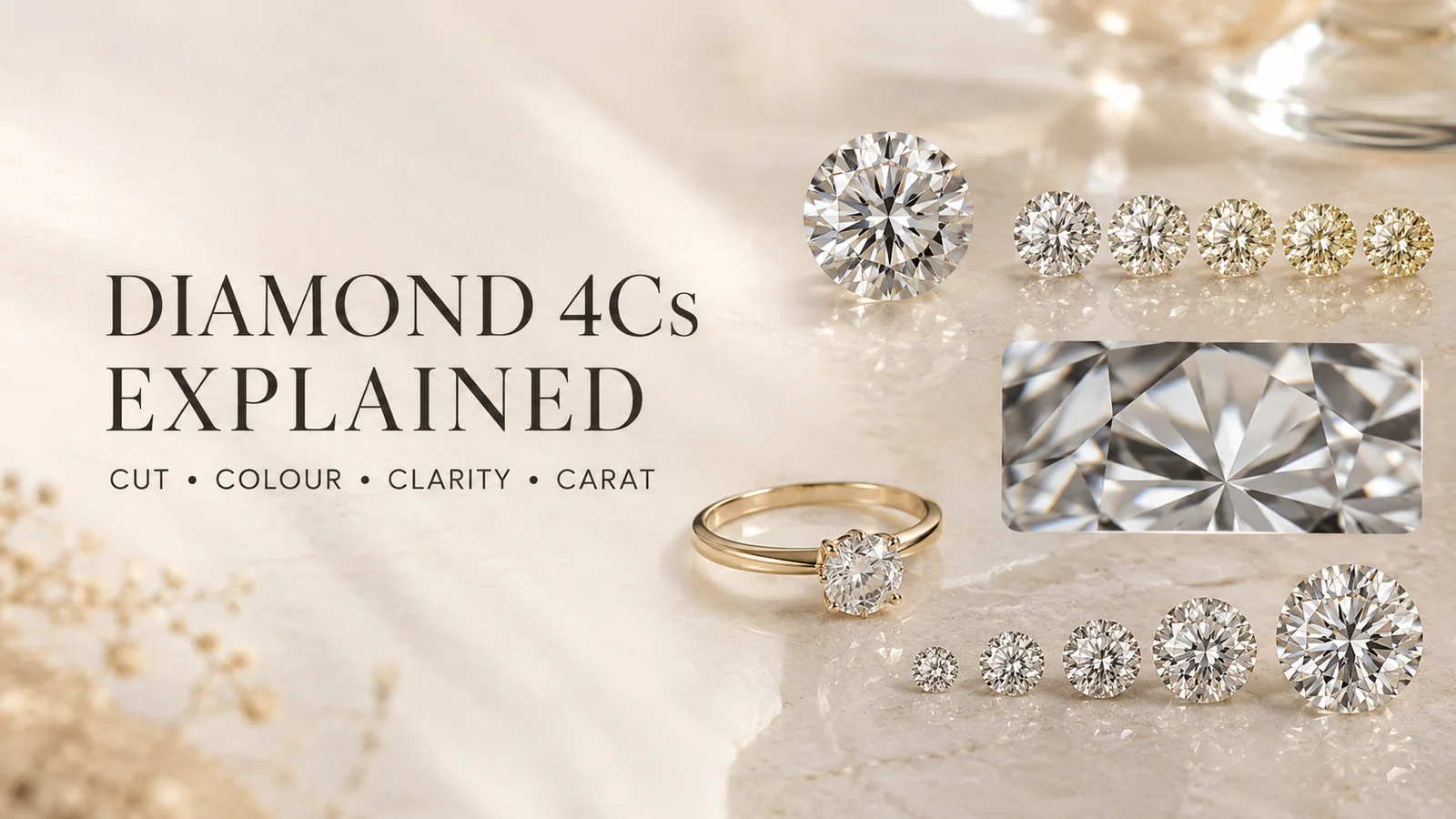
Choosing a diamond can feel complicated when you encounter different grades, measurements and technical terms. The easiest way to understand diamond quality is through the 4Cs: Cut, Colour, Clarity and Carat.
These four characteristics help describe and compare diamonds. Each one contributes differently to the diamond’s appearance, quality and price.
Whether you are buying an engagement ring, pendant, mangalsutra, nose pin, earrings or bracelet, understanding the 4Cs will help you make a more confident decision.
What Are the Diamond 4Cs?
The diamond 4Cs represent:
Cut: How effectively the diamond reflects light
Colour: How colourless or tinted the diamond appears
Clarity: The presence of internal and external characteristics
Carat: The weight of the diamond
The 4Cs apply to both natural and laboratory-grown diamonds. Instead of judging a diamond by only one characteristic, buyers should consider the overall balance between all four.
1. Diamond Cut
Diamond cut is one of the most important factors affecting brilliance and sparkle.
When light enters a well-cut diamond, it reflects through the facets and returns through the top. This creates the bright sparkle and flashes of colour associated with a beautiful diamond.
A poorly cut diamond may allow light to escape through the bottom or sides, making it appear less brilliant—even if it has a high colour or clarity grade.
What Does Diamond Cut Include?
Cut quality can be influenced by:
Proportions
Symmetry
Polish
Facet alignment
Depth
Table size
Overall craftsmanship
Cut Is Different from Shape
The terms “cut” and “shape” are often confused.
Shape describes the diamond’s outline, such as:
Round
Oval
Pear
Princess
Emerald
Cushion
Marquise
Heart
Cut quality describes how well the diamond has been proportioned and polished to reflect light.
Why Is Cut Important?
A well-cut diamond can:
Produce stronger brilliance
Display attractive sparkle
Appear visually lively
Look more impressive for its carat weight
Improve the overall beauty of the jewellery
When comparing diamonds, cut quality should usually be given high priority.
2. Diamond Colour
Diamond colour refers to the presence or absence of colour in a diamond.
Many diamonds that look white may contain slight yellow or brown tones. These differences can be very subtle and may not be easily visible without professional comparison.
How Does Gold Colour Affect Your Choice?
The colour of the metal can influence how a diamond appears.
White Gold
White Gold creates a bright, modern appearance. A diamond with a more colourless look can complement the cool tone of the metal.
Yellow Gold
Yellow Gold offers a warm and traditional appearance. Its rich colour may make subtle warmth in a diamond less noticeable.
Rose Gold
Rose Gold creates a romantic and contemporary look. Its warm pink tone pairs beautifully with both colourless and slightly warm diamonds.
Should You Always Select the Highest Colour Grade?
Not necessarily.
A higher colour grade may increase the price, but the visual difference between nearby grades can be difficult to notice once the diamond is set in jewellery.
The ideal colour depends on:
Your selected gold colour
Diamond shape
Jewellery design
Personal preference
Available budget
3. Diamond Clarity
Clarity describes the natural internal and external characteristics found in a diamond.
Internal characteristics are known as inclusions, while external surface characteristics are often called blemishes.
These features may develop during the diamond’s growth or manufacturing process. Many are microscopic and cannot be seen with the unaided eye.
Common Diamond Characteristics
A diamond may contain characteristics such as:
Tiny crystals
Clouds
Feathers
Pinpoints
Growth patterns
Surface marks
Their visibility depends on their size, type, number and location.
What Is an Eye-Clean Diamond?
An eye-clean diamond has no inclusions that are easily visible without magnification when viewed under normal conditions.
For many buyers, an eye-clean diamond can provide an attractive balance between appearance and price without paying extra for microscopic perfection.
Does Higher Clarity Mean More Sparkle?
Not always.
Clarity can affect appearance when inclusions are large or noticeable, but cut quality generally has a more direct influence on sparkle.
A diamond with excellent clarity but poor cut may appear less brilliant than a well-cut diamond with a lower but eye-clean clarity grade.
4. Diamond Carat
Carat measures a diamond’s weight.
One carat equals 200 milligrams. Carat does not directly measure the visible width or height of a diamond.
Two diamonds with the same carat weight can appear different in size because of differences in:
Shape
Depth
Proportions
Cut
Setting style
Carat Weight vs Visible Size
A well-proportioned diamond may appear larger from the top because its weight is distributed effectively.
A diamond that is cut too deep may carry more weight below the surface, making it appear smaller than expected when viewed from above.
Total Carat Weight
In jewellery containing multiple diamonds, you may see the term Total Carat Weight, sometimes written as TCW or CTW.
This represents the combined weight of all diamonds in the jewellery—not necessarily the weight of the centre diamond.
For example, a ring may contain one centre diamond and several smaller side diamonds. Its total carat weight includes all of them.
Which of the 4Cs Is Most Important?
There is no single answer for every buyer, but cut is often given the highest priority because it strongly influences brilliance.
A practical order of consideration is:
Choose a well-cut diamond.
Select a colour that complements the gold and design.
Look for clarity that appears clean to the eye.
Choose a carat weight that fits your desired look and budget.
This approach can provide a visually beautiful diamond without unnecessarily paying for grades that may not create a noticeable difference.
How the 4Cs Affect Diamond Price
Diamond pricing depends on the combination of all four characteristics.
A larger diamond may cost more, but carat weight is not the only factor. A smaller diamond with excellent cut, high colour and high clarity may cost more than a larger diamond with lower grades.
Diamond prices can also be affected by:
Diamond shape
Certification
Natural or laboratory-grown origin
Quality of cutting and polishing
Market availability
Jewellery craftsmanship
Gold purity and weight
Complexity of the setting
Always compare the complete specifications rather than judging a diamond only by size.
Choosing the 4Cs According to Jewellery Type
Different types of jewellery may require different priorities.
Engagement Rings
For an engagement ring, prioritise:
Excellent brilliance
Secure setting
Attractive centre-diamond proportions
Eye-clean clarity
Colour that complements the chosen gold
Diamond Pendants
For pendants, consider:
Visible sparkle from a normal viewing distance
Pendant dimensions
Chain length
Gold colour
Total diamond weight
Diamond Earrings
For earrings, matching is important. The two diamonds should look balanced in size, colour and overall appearance.
Because earrings are generally viewed from a distance, extremely high clarity may not always be necessary.
Diamond Nose Pins
Nose pins usually contain smaller diamonds, making cut and visible sparkle particularly important. The overall size and setting should also suit the wearer’s facial proportions.
Diamond Mangalsutras
For a diamond mangalsutra, consider:
Pendant size
Diamond arrangement
Chain length
Number and placement of black beads
Comfort for everyday wear
Secure diamond settings
Diamond Bracelets and Bangles
For bracelets and bangles, focus on:
Consistency between multiple diamonds
Secure settings
Flexibility and comfort
Clasp quality
Total carat weight
Durability for regular use
Diamond Shape and the 4Cs
Diamond shape can influence how colour, clarity and carat weight appear.
Round Brilliant
Known for excellent light performance and classic sparkle.
Oval
Offers an elegant, elongated appearance and may look larger from the top.
Pear
Combines rounded and pointed elements for a distinctive, graceful look.
Emerald
Features step-cut facets and a sophisticated appearance. Its open facet pattern may make clarity characteristics more visible.
Princess
A modern square shape with strong brilliance and sharp corners.
Cushion
Offers soft corners and a romantic, vintage-inspired appearance.
Heart
A symbolic shape associated with love and meaningful gifts. Symmetry is especially important in a heart-shaped diamond.
Choose a shape based on personal style rather than trends alone.
Certified Diamonds and Grading Reports
A diamond grading report provides important information about the diamond’s identity and quality characteristics.
Depending on the diamond and report, it may include:
Diamond measurements
Carat weight
Colour information
Clarity information
Cut details
Polish and symmetry
Diamond shape
Laboratory-grown or natural origin
Identification number
Treatment disclosure, where applicable
Always confirm that the information on the report matches the diamond or jewellery being purchased.
Diamond Certification vs BIS Hallmarking
Diamond grading and gold hallmarking are different.
A diamond grading report describes the diamond and its quality characteristics.
A BIS Hallmark confirms the declared purity of the gold used in the jewellery.
When buying gold diamond jewellery, check both the diamond details and the applicable gold hallmark information.
Common Mistakes to Avoid
Avoid these common mistakes when selecting a diamond:
Choosing only by carat weight
Ignoring cut quality
Paying for clarity grades that offer no visible difference
Selecting colour without considering the gold tone
Confusing diamond shape with cut quality
Assuming total carat weight is the centre-diamond weight
Buying without reviewing diamond information
Ignoring jewellery measurements
Focusing only on price instead of overall quality
Purchasing without checking return and warranty policies
Frequently Asked Questions
What do the diamond 4Cs stand for?
The 4Cs stand for Cut, Colour, Clarity and Carat. Together, they help describe and compare diamond quality.
Which C creates the most sparkle?
Cut has the greatest influence on how effectively a diamond reflects light and displays sparkle.
Is a higher-carat diamond always better?
No. A larger diamond may not be more beautiful if it has poor proportions or cut quality. Overall balance is more important than carat alone.
What is an eye-clean diamond?
An eye-clean diamond has no inclusions that are easily visible to the unaided eye under normal viewing conditions.
Is diamond shape part of the 4Cs?
No. Shape refers to the outline of the diamond, while cut quality describes proportions, symmetry, polish and light performance.
Do the 4Cs apply to laboratory-grown diamonds?
Yes. Laboratory-grown diamonds can also be described according to Cut, Colour, Clarity and Carat.
Does a BIS Hallmark certify diamond quality?
No. A BIS Hallmark relates to the purity of the gold. Diamond quality information is provided separately through diamond specifications or a grading report.
Find the Right Diamond for You
At Ellips Diamond Jewellers, we help you select jewellery with the right balance of beauty, quality, design and budget.
Explore our elegant collection of rings, pendants, earrings, nose pins, mangalsutras, bracelets and bangles—or contact us for a customised design.
Certified Lab-Grown Diamonds • BIS-Hallmarked Gold • Customisation Available
Contact: support.ellips@gmail.com
Ellips Diamond Jewellers